
Montessori Schooling Deep Dive: The Montessori Method of Teaching
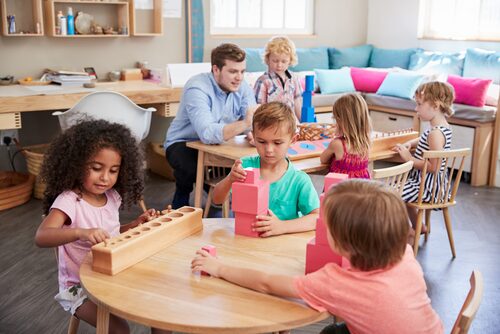
Did you know that there are close to 5,000 Montessori schools in the United States, and that number is rising every day?
Montessori schools offer a fantastic environment for your child to learn in engaged, self-directed ways. But what is the Montessori schooling method, and how does it improve your child’s educational experience?
The Montessori method is built around empowering children to become passionate lifelong learners. Read on to learn more about Montessori schooling and the principles that guide it.
The Foundations of Montessori Schooling
Before we dive into the specifics of how Montessori schooling works, let’s talk some about the basics of the method. Montessori schooling is a teaching approach that allows children to direct their own learning. Teachers act as guides, and children can explore ideas through hands-on activities.
The Montessori method can teach children independence and curiosity from an early age. They’ll learn to better interact with children of other ages and will begin to take charge of their own learning. They’ll also discover the joy of education and develop creative problem-solving skills that they can use throughout the rest of their lives.
History of Montessori Schooling Methods
The Montessori method got its start in Italy during the early twentieth century with Dr. Maria Montessori. Dr. Montessori was one of Italy’s first physicians, and she specialized in working with mentally disabled children. As she found ways to connect with these children, she began to wonder what would happen if she used those ideas with neurotypical children.
In 1907, Dr. Montessori founded the Montessori Children’s House, a school for preschoolers in Rome. Within five years, the principles she used in those classrooms had spread like wildfire to classrooms all over the world. Dr. Montessori continued to expand and develop her methods all the way until her death in 1952.
Focus on the Whole Child
There are seven foundational Montessori principles at the heart of the method:
- Education should focus on the whole child.
- Children have absorbent minds.
- Children want to learn.
- There are sensitive periods in child development.
- Children learn through play.
- Children want to be independent.
- Peaceful teaching creates a peaceful society.
The first of these principles states that education should focus on the needs and wellbeing of the whole child. An effective education system can’t just expect to cram information into a child’s head, regardless of their circumstances. Montessori classrooms aim to address the overall wellbeing of the child and then approach education from that point of view.
Children Have Absorbent Minds
The second principle of the Montessori method states that children have absorbent minds. Dr. Montessori believed that children’s minds are hard-wired to learn, accepting new information.
This is a period of life when children are absorbing everything from language and social skills to math and science. It’s only natural that their brains would be primed to learn.
If you look at the number of children who struggle in school, it can be easy to come to the conclusion that some children can’t learn.
But the Montessori method challenges this idea. It starts with the belief that all children have minds just waiting to absorb new information. The classroom is responsible for presenting that information in a way that they can take in.
Children Want to Learn
Not only does the Montessori method believe that all children are capable of learning, it says that they want to learn. Children are naturally curious, exploring the world around them and discovering new wonders every day. From our first moments on earth, we use our senses to learn about our surroundings, and that curiosity only grows as we see more of the world.
Once again, the Montessori method challenges the idea that children are at fault for poor academic performance. Instead, Montessori classrooms are built on the idea that children are eager to learn, excited about exploring their world. The classroom has to maintain that excitement and direct it in constructive ways.
Sensitive Periods in Child Development
With that baseline established, the Montessori principles move on to an examination of how children learn. Dr. Montessori believed that there were certain sensitive periods during the different stages of child development. During these times, she said that children were more prepared to learn certain skills.
Dr. Montessori identified six sensitive periods in child development. At different ages, children were especially tuned into learning about order, language, walking, social skills, small objects, and learning through the senses. Using these stages can help a Montessori teacher better tap into their students’ current strengths.
Children Learn Through Play
We all play as children, but Dr. Montessori believed that play was more than just a fun way to pass the time. She believed that children learn through play, and modern research has supported this idea. Children learn everything from motor skills to social skills by playing.
This new understanding of the importance of play brought a new approach to the Montessori classroom. Instead of trying to keep children from playing during lessons, Montessori classrooms work to direct that play. Children can have fun with their learning and absorb information in a more natural way.
Children Want to Be Independent
If you’ve ever tried to get a three-year-old dressed for the day, you’ll know that children want to be independent. Before they even take their first steps, children are trying to learn how to do things for themselves. They practice new skills, copy their parents and teachers, and work to be able to handle things on their own.
Unfortunately, many modern classrooms actively try to squash that independent spark. It’s easier for most teachers to keep children in line, so most students aren’t given the chance to be independent. Montessori classrooms put power back in the children’s hands, allowing them to take charge of their education.
Peaceful Teaching Creates a Peaceful Society
Dr. Montessori lived through both world wars. The experience made her think a lot about how societies can fall under the power of authoritarian leaders. She believed that a lot of the behaviors that keep people obeying dictators come out of classrooms.
When we’re taught from an early age to sit down, be quiet, and follow the rules, we’re not very likely to stand up against a national leader who tells us to do just that.
Dr. Montessori wanted to create a classroom that worked against those authoritarian societies. She believed that peaceful teaching creates a peaceful society. Children get taught from a young age to think critically and to work with others to solve problems peacefully.
Multi-Age Classrooms
Now that we know a little more about the principles behind the Montessori method, let’s dive into what the classrooms look like. Many Montessori classrooms are multi-age, meaning they contain children from different grade levels. All of these children learn in the same environment, and some of them will even work together in groups.
Being in the classroom with children of different ages can teach students better social skills. After all, once we get into the real world, we don’t interact only with people our age.
Older students can act as role models and mentors for younger students. Students who may be more mature than other kids their age can find peers in the older students.
Hands-On Learning
Given what we know about the Montessori principles, it should come as no surprise that Montessori classrooms are hands-on. Classroom activities are designed to engage students and get them excited about what they’re learning. Hands-on activities can also engage all the senses, making it easier for children in those sensitive stages to absorb the material.
Instead of worksheets and coloring pages, Montessori classrooms will have activity stations.
Children can learn about scientific principles by exploring them first-hand. Math lessons will involve moving tokens or similar sorts of activities. Children also learn personal hygiene in a hands-on way, practicing it every day in the classroom.
Freedom to Choose
One of the most important focuses of the Montessori classroom is giving students the freedom to choose. Of course, children can’t do whatever they want all day, but teachers aim to guide them to an activity and choose how they’d like to approach it. Wherever possible, students are given control of their education.
Montessori classrooms contain a number of different learning stations that students can pick from each day. They can decide what subject they’d like to work on and when they’d like to change topics. They can also choose to sit at tables, on the floor, or even in reading nooks, depending on where they can learn best.
Small Groups
A multi-age classroom of children working wherever they want may sound chaotic. But a Montessori classroom actually has a solid structure going on in the background.
Most of these classrooms have multiple teachers, each of whom gets a small group of students to work with. These students can be from any age group in the class, and groups are usually fewer than ten students.
These small groups get together for some lessons, which are given in an interactive style. Students can ask and answer questions, explore new ideas, and help each other out. Not only does this allow them to better engage with the information they’re learning, but it also helps to teach them social skills.
Learning as Its Own Reward
If you go into a traditional modern classroom, you may see sticker charts, reward sheets, and buckets of candy or other treats. Many teachers use these rewards as a sort of positive reinforcement for students getting their work done or behaving in class. But Montessori classrooms don’t contain any of these sorts of treats, and you might be surprised at the reason.
Dr. Montessori believed that learning is its own reward and should be treated that way in the classroom. Students shouldn’t have to be bribed into learning, because they’ll be excited about getting the new information. Montessori classrooms don’t have tangible treats in order to help students internalize this idea.
Whole-Life Education
Montessori classrooms also work to uphold the first principle of the Montessori method: focus on the whole child.
The class does obviously have to cover things like math, literature, and history. But these classrooms also focus on teaching overall life skills. This can better prepare students for the challenges of living in the real adult world.
In addition to the hygiene practice we mentioned, Montessori classrooms will focus on teaching students about culture and practical life. They may teach real-world skills ranging from how to tie your shoes to how to balance a checkbook. They also teach creative problem solving and sensory engagement.
Learn More About Montessori Schooling
The Montessori method is a creative approach to education that works to empower children and teach them a lifelong love of learning. Montessori classrooms include children of multiple ages who get divided into small groups for interactive lessons. Children are allowed to pursue their natural curiosity and learn whole-life skills, rather than just academic lessons.
If you’d like to learn more about Montessori schooling, we encourage you to take a look at the rest of our site at CS Partners. We can provide you with a powerful network of educational professionals on your side. Book a discovery call with us today and start getting back to doing what you love: serving your students.
